Mauritius and the Caribbean are separated by thousands of miles—one located in the Indian Ocean, the other in the Americas—yet their musical traditions share a profound, intertwined history. Both regions forged their iconic rhythms from the crucible of the transatlantic and Indian Ocean slave trades. Today, the dialogue between these two distant island cultures is stronger than ever.
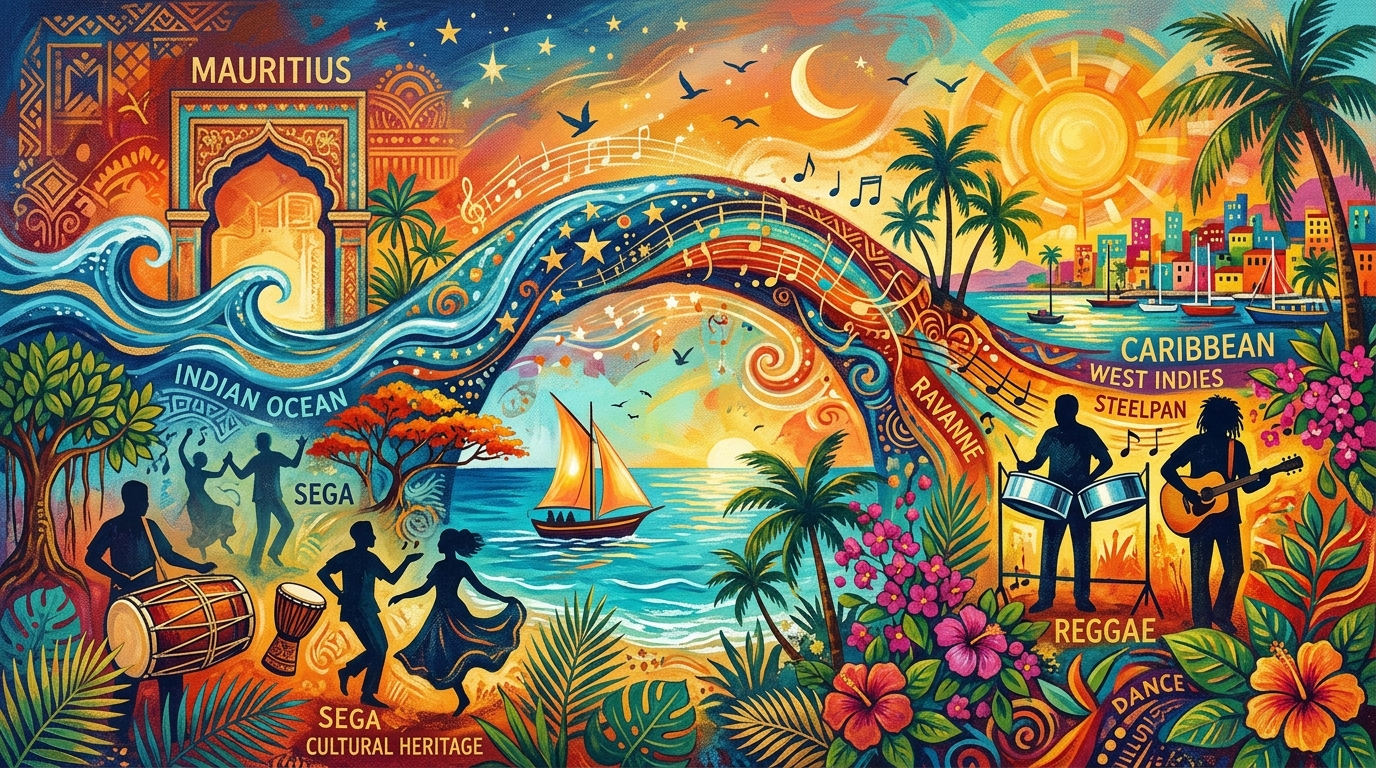
1. Shared Origins: The Fire of Creolization
The most fundamental link between Mauritian Sega and Caribbean genres like Calypso, Zouk, and early Reggae is their birth on plantation societies. Enslaved populations from Africa and Madagascar used music as a critical tool for survival, oral storytelling, and resistance against colonial erasure.
This shared trauma birthed "creolization"—the blending of African syncopated, polyrhythmic percussion with European and indigenous influences. In both regions, the resulting music was historically stigmatized by colonial authorities as "vulgar" due to its association with hip-driven dancing. Today, both Sega and Reggae have transcended these oppressive beginnings to become globally recognized national symbols.
2. Rhythmic Clash: Sega (6/8) vs. Reggae (4/4)
Despite their shared origins, the fundamental rhythms of Mauritius and Jamaica developed entirely differently. The eventual fusion of these two styles is an impressive musical feat.
| Genre | Origin | Time Signature | Key Instruments | Primary Feel |
|---|---|---|---|---|
| Traditional Sega | Mauritius | 6/8 (Ternary / Triplet pulse) | Ravanne, Maravanne, Triangle | Rolling, bouncing, swaying |
| Roots Reggae | Jamaica | 4/4 (Duple pulse) | Bass, Drum Kit, Electric Guitar | Steady, laid-back, anchored "one-drop" |
| Calypso | Trinidad & Tobago | 4/4 or 2/2 (Cut time) | Steelpan, Brass, Percussion | Upbeat, highly syncopated |
| Seggae | Mauritius | Hybrid 6/8 over 4/4 | Ravanne + Reggae Rhythm Section | Heavy bass with a bouncing sway |
3. The Bob Marley Myth and the Birth of Seggae
There is a persistent local myth that Bob Marley visited Mauritius. He did not. His famous African concerts were in countries like Gabon and Zimbabwe. However, his ideological and musical influence on the island was monumental.
In the 1980s, Mauritian musician Joseph Réginald Topize was so inspired by Marley that he adopted the stage name Kaya (after Marley’s 1978 album). Kaya achieved the impossible: he merged the rolling 6/8 ternary sway of his homeland’s Sega with the slow, 4/4 off-beat guitar skank of Reggae. Seggae was born, adopting the conscious, Rastafarian-inspired social commentary of Reggae to fight for the rights of the Mauritian Creole community.
4. Modern Interplay: "Dancehall Mauricien"
The dialogue didn't end with Seggae. In the 1990s and 2000s, Jamaican sound system culture, mixtapes, and "riddims" heavily permeated Mauritian youth culture. Local producers began taking the classic Jamaican dembow groove (the backbone of Dancehall and Reggaeton) and layering it with traditional Mauritian maravanne rattles and Indian Ocean pop melodies.
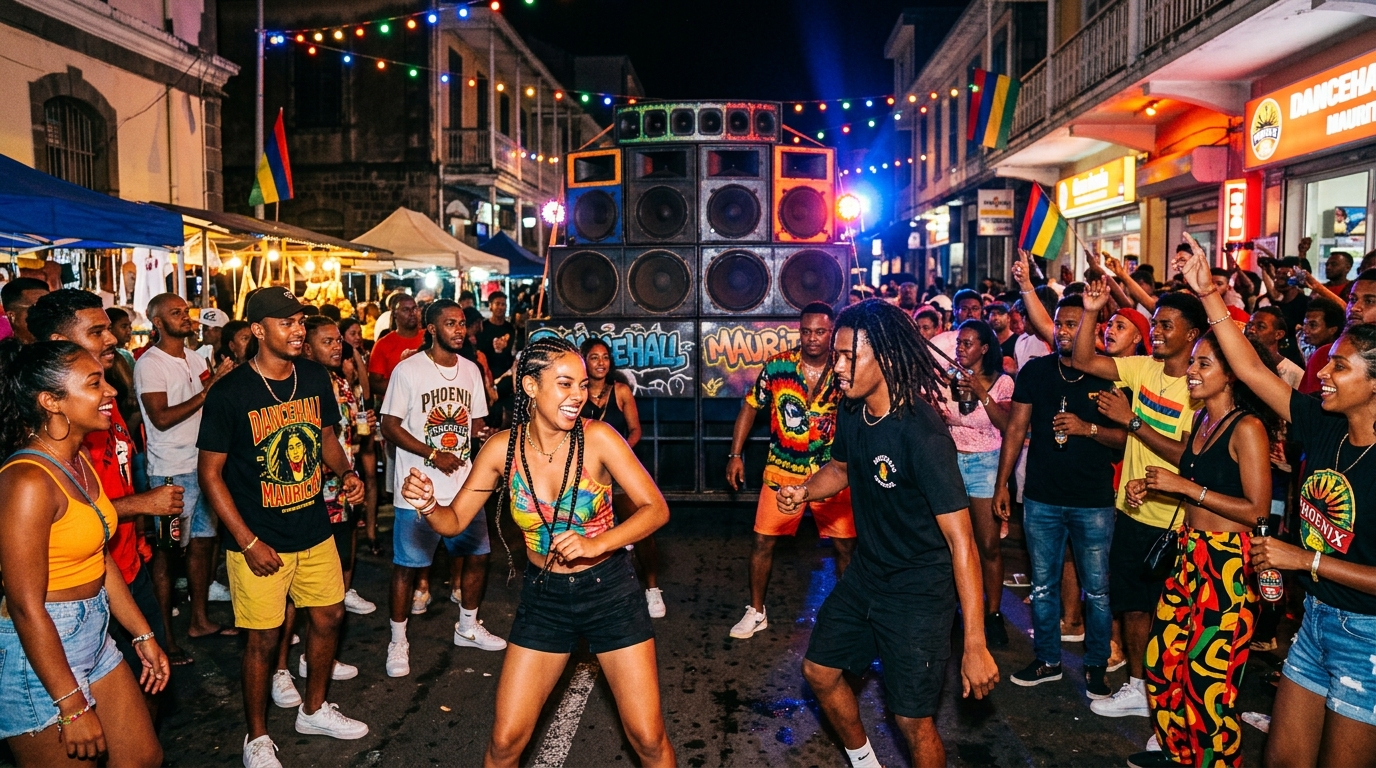
This hybridization led to "Dancehall Mauricien." Today, pioneering groups like Otentik Street Brothers (OSB) and artists like Blakkayo blend Dancehall's rapid-fire toasting, heavy 808s, and digital production with Creole lyrics that reflect Mauritian street life. It proves that the diasporic connection between the Caribbean and the Indian Ocean remains vibrant, loud, and continually evolving.
Explore the Sounds
Discover sega, seggae, and dancehall mauricien on Ravanova Music. Download on iOS or Android.
Related reading: Learn about Sega and Seggae. Discover the instruments that define Mauritian music. Or explore all genres on our Mauritian Music hub page.